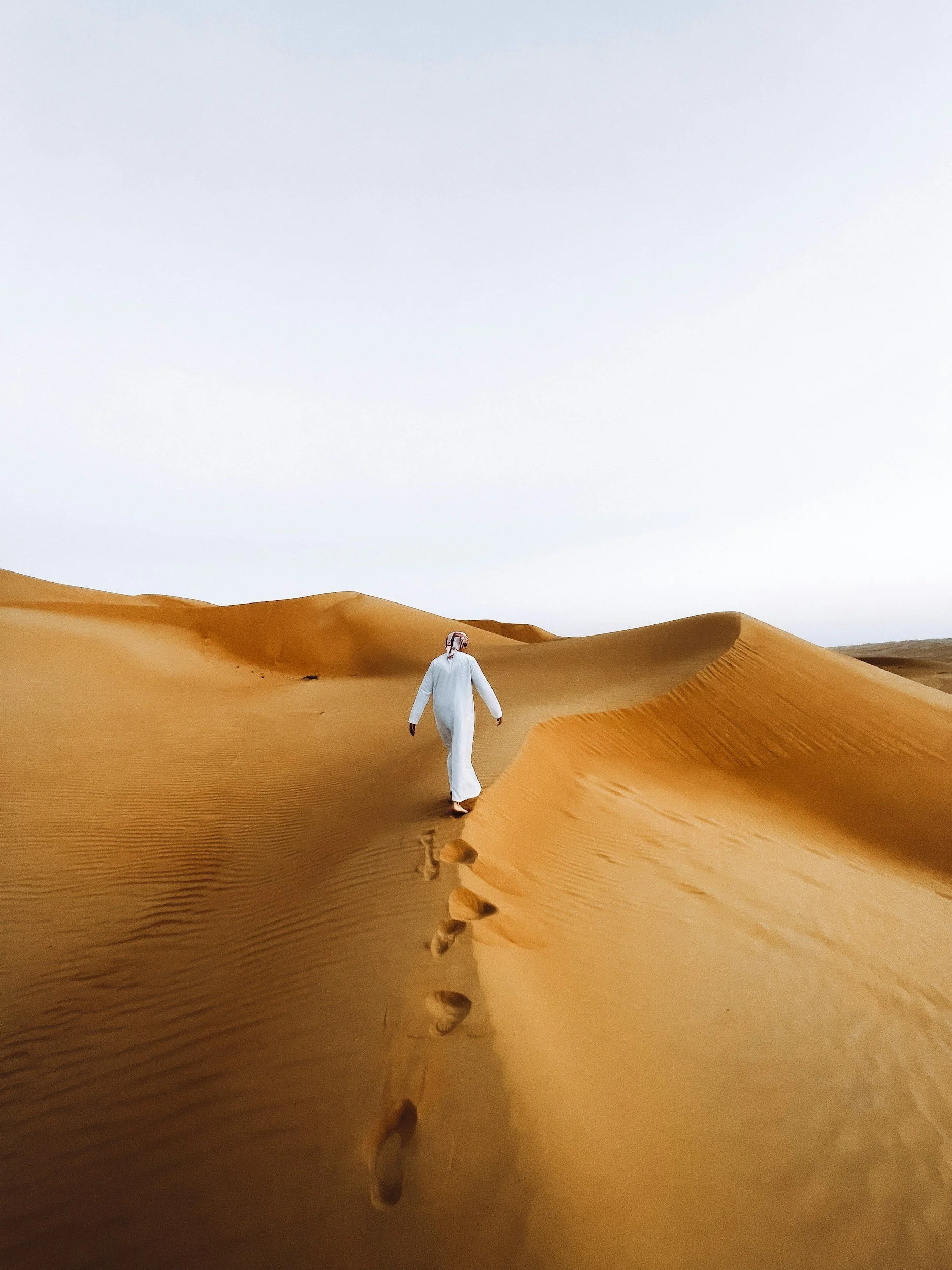
About Oman
Oman is a destination shaped by contrasts — breathtaking mountains rising above ancient villages, vast desert landscapes meeting turquoise coastline, and centuries-old traditions existing comfortably alongside modern life. For travelers, it offers something increasingly rare: a sense of authenticity that still feels untouched.
Located on the southeastern edge of the Arabian Peninsula, Oman is known for its remarkable geographic diversity. In a single journey, you can drive through rugged mountain roads, swim in clear wadis, camp beneath desert skies, and explore quiet fishing towns along the Arabian Sea.
Oman’s history as a maritime trading nation has also shaped its identity. For centuries, Omani sailors and merchants connected East Africa, India, and the Arabian Gulf, leaving a cultural legacy that can still be felt today through architecture, cuisine, traditions, and coastal communities. Historic forts, ancient aflaj irrigation systems, traditional souqs, and preserved villages continue to play an important role in everyday life rather than existing only as tourist attractions.
Modern infrastructure, luxury resorts, and contemporary city life exist alongside deeply rooted customs and heritage. Visitors often notice the calm atmosphere, clean cities, and genuine hospitality that define daily life across the country.
What makes Oman especially memorable is the feeling of space and freedom. Roads lead to hidden wadis, quiet beaches, high mountain plateaus, and landscapes that often feel undiscovered, making Oman ideal for travelers seeking nature, culture, and meaningful experiences.
Video credit: Experience Oman
History of Oman
Oman has a rich and fascinating history shaped by trade, seafaring, and cultural exchange. For centuries, it was a powerful maritime nation with connections reaching as far as East Africa, India, and China. In the 17th and 18th centuries, Oman controlled parts of the East African coast, including Zanzibar, which influenced its culture, architecture, and cuisine.
The country’s strategic location made it an important hub for the frankincense trade - one of the ancient world’s most valuable commodities. Oman’s historic forts, castles, and old towns still reflect this legacy.
In modern times, the country has undergone rapid yet balanced development, while maintaining a strong connection to its past. This blend of history and progress is visible throughout the country today.
Geography and Location
Oman is located in the southeastern edge of the Arabian Peninsula, bordered by the UAE, Saudi Arabia, and Yemen, with coastlines along the Arabian Sea and the Gulf of Oman. Its geography is surprisingly diverse.
The Al Hajar Mountains run across the north, offering dramatic landscapes and cooler climates, while vast desert regions like Wahiba Sands stretch across the interior.
Along the coast, you’ll find pristine beaches, cliffs, and marine-rich waters.
In the south, the region of Salalah transforms into a lush, green landscape during the monsoon season - something rare in this part of the world. This variety makes Oman unique, allowing travelers to experience multiple landscapes within a single journey.
Climate and Seasons
Oman has a predominantly dry climate, shaped by sunshine, low rainfall, and warm temperatures throughout most of the year. However, the country’s varied geography creates noticeable seasonal differences across different parts of Oman. This diversity makes the country an ideal year-round destination, with each season offering different experiences — from desert adventures and coastal retreats in winter to mountain escapes and lush Khareef season during summer
-

Winter (November – March)
Winter is considered the best time to visit Oman, with pleasant temperatures and clear skies across most regions. Daytime temperatures typically range between 20°C and 28°C, while evenings in the mountains and desert can become much cooler. This season is ideal for road trips, hiking, camping, desert experiences, and outdoor exploration.
-

Spring (April – May)
Spring brings warmer weather, especially inland and in desert areas. Temperatures usually range from 28°C to 38°C, with coastal areas remaining slightly more humid. It is still a good time for mountain escapes, beach destinations, and water activities before the peak summer heat arrives.
-

Summer (June – September)
Summer in Oman is hot and sunny, particularly in inland regions where temperatures often exceed 40°C. Coastal cities experience higher humidity, while the mountains remain noticeably cooler. During this season, the southern Dhofar region becomes famous for the Khareef monsoon, transforming the area around Salalah into a lush green landscape with mist, waterfalls, and cooler temperatures ranging between 20°C and 27°C.
-

Autumn (October)
Autumn marks the transition back to milder weather. Temperatures begin to decrease across the country, averaging between 25°C and 35°C, making it an excellent time for beach escapes, cultural travel, and outdoor activities before the peak winter season begins again.
People and Culture of Oman
Oman is known not only for its landscapes, but also for the warmth, hospitality, and strong cultural identity of its people. Omani culture is deeply rooted in tradition, yet shaped by centuries of trade, exploration, and connection with regions across East Africa, India, and the Arabian Gulf.
Hospitality is an important part of everyday life in Oman. Visitors are often welcomed with traditional Omani coffee (kahwa), dates, and genuine friendliness, whether in homes, local shops, villages, or desert camps.
Traditional customs remain visible throughout daily life. Men commonly wear the dishdasha with the traditional kumma cap or mussar, while women wear elegant embroidered dresses and abayas that reflect regional styles and heritage. Music, poetry, handicrafts, frankincense traditions, silverwork, and dhow-building continue to play an important role in preserving Omani identity.
Unlike destinations where heritage is separated from modern life, Oman’s culture remains naturally woven into everyday experiences — giving travelers a deeper and more authentic connection to the country.
Traditions and Etiquette
In Oman, traditions and etiquette are an important part of everyday life, shaping how people interact, dress, and welcome visitors.
Hospitality & Greetings
Hospitality is central to Omani culture. Guests are often welcomed with Omani coffee (kahwa) and dates, sometimes accompanied by frankincense. Refusing hospitality can be considered impolite, so even a small gesture of acceptance is appreciated.
Dress & Public Etiquette
Modesty is valued in public spaces. Visitors are encouraged to dress conservatively, especially in villages, markets, and religious sites. Shoulders and knees should generally be covered. Swimwear is acceptable at beaches, pools, and private resorts, but not in public areas.
Religious Respect
Islam plays a central role in daily life. During prayer times, some businesses may briefly pause activity. In mosques, visitors should dress modestly, remove shoes, and follow local guidelines. Women are required to cover their hair when entering religious sites.
Photography Etiquette
Always ask permission before photographing people. Some government buildings and private properties may also restrict photography.
Ramadan & Cultural Sensitivity
During Ramadan, eating, drinking, and smoking in public during daylight hours is prohibited. The atmosphere becomes more spiritual and communal in the evenings, with special gatherings and meals after sunset.
Religion and Customs
In Oman, religion and customs are deeply woven into everyday life, shaping social values, traditions, and the rhythm of the day. Islam is the official religion and plays a central role in both public and private life, with daily routines often aligning with the five prayer times. Mosques are important community landmarks, not only for worship but also as places that reflect Oman’s architectural beauty and cultural identity.
Religious customs also shape public life. Fridays are the main day of prayer and rest, while during Ramadan, daily routines change significantly, with fasting observed during daylight hours and lively evening gatherings after sunset.
Overall, religion and tradition in Oman form a natural and visible part of its cultural identity.
Omani Cuisine
Oman’s cuisine reflects the country’s diverse history of agriculture, fishing and trade across the Arabian Gulf, East Africa, India, and Persia. The result is a rich culinary tradition built on fragrant spices, slow-cooked dishes, and a strong emphasis on hospitality and sharing meals.
Due to the diversity of the people of Oman and their histories, dishes evolved differently across Oman’s geography, with certain dishes being popular in some parts of the country, but not appearing on the menus in the other parts. Don’t be surprised if you looked up a dish, and a local you speak to hasn’t heard of it. In fact, treat Omani cuisine like a treasure hunt.
That being said, there are a few dishes that are a staple in every Omani household. One of the most iconic Omani dishes is shuwa, a festive meal of marinated lamb or goat wrapped in banana or palm leaves, and slow-cooked in an underground sand oven for up to two days. It is traditionally prepared for special occasions such as Eid and family celebrations, symbolizing patience, community, and celebration.
Another staple is Orsiya, a uniquely Omani rice dish made from finely ground rice cooked with meat broth until it becomes soft, smooth, and slightly sticky — almost like a savory rice pudding. You can also find a similar dish called Harees — a slow‑cooked Omani classic made from wheat and meat (usually chicken or lamb), beaten until it becomes a silky, porridge‑like dish.
For dessert, Omani halwa is the most famous sweet — a gelatinous, aromatic treat made with rosewater, saffron, sugar, and nuts. It is often served with kahwa (Omani coffee) as part of traditional hospitality.
Meals in Oman are often communal, reflecting the importance of generosity and connection. Whether in homes, restaurants, or roadside cafés, food is closely tied to culture, celebration, and everyday social life.
Need Help Planning Your Oman Adventure?
Get a personalized itinerary with curated experiences, local recommendations, and the best routes across the Sultanate with the help of Oman Travel Hub
Discover Things To Do in Oman
Discover ways to experience Oman, from exploring ancient forts and traditional villages to hiking dramatic mountains, diving in clear coastal waters, and venturing into vast desert landscapes. Whether you’re drawn to culture, nature, adventure, or relaxation, Oman offers a diverse range of experiences shaped by its rich heritage and striking geography.
